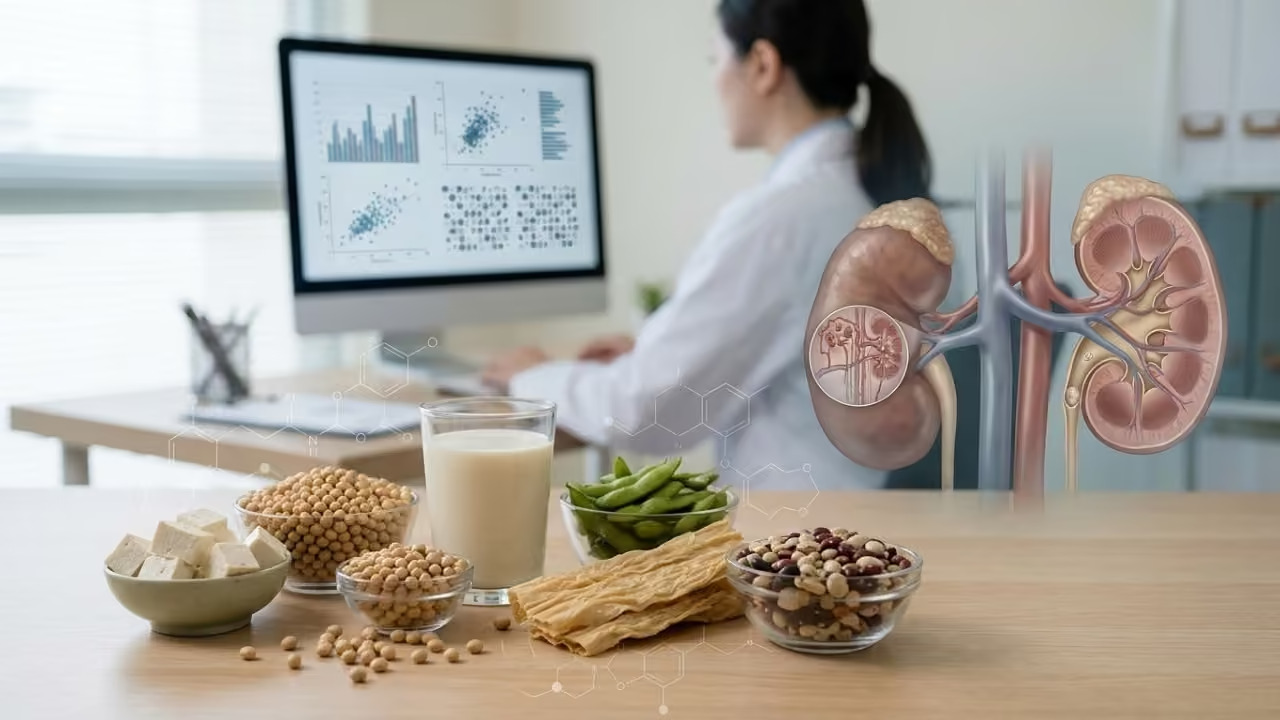
Eating more bean products and soy-derived compounds may be associated with lower odds of chronic kidney disease, according to a large study involving more than 27,000 adults in China.
Researchers analyzing data from the Northeast China Biobank found that people with the highest intake of beans and bean products had about 33% lower odds of chronic kidney disease, or CKD, compared with those consuming the least.

A similar pattern emerged for soy isoflavones, naturally occurring plant compounds found in foods such as soybeans, tofu and soy milk. Participants with the highest isoflavone intake had around 30% lower odds of CKD.
According to the study published in Nutrition Journal, the findings point to a potentially beneficial relationship between soy-rich foods and kidney health.
However, the study was cross-sectional, meaning researchers assessed diet and kidney status at roughly the same point in time. It therefore cannot establish that eating more soy or bean products actually prevents kidney disease.
Table of Contents
Researchers Studied More Than 27,000 Adults

The analysis included 27,003 adults aged 18 or older who participated in the Northeast China Biobank between July 2018 and December 2019.
Researchers assessed participants’ usual diets using a validated 110-item food-frequency questionnaire.
They then compared dietary patterns with indicators of kidney health.

Among the participants:
- 900 met the study criteria for CKD;
- 26,103 did not.
| Study Detail | Finding |
|---|---|
| Participants | 27,003 |
| CKD cases | 900 |
| Study population | Northeast China |
| Study design | Cross-sectional |
| Diet assessment | 110-item food-frequency questionnaire |
| Highest beans/bean-products intake | 33% lower CKD odds |
| Highest soy isoflavone intake | 30% lower CKD odds |
| Journal | Nutrition Journal |
The overall CKD prevalence in the study population was about 3.3%.
What Foods Were Included?
Researchers examined both whole beans and foods made from beans, particularly soy.
Examples included:
- soybeans;
- mung beans;
- snap beans;
- bean sprouts;
- tofu;
- dried tofu;
- soy milk;
- tofu pudding.
The study also estimated participants’ intake of major soy isoflavones, including:
- genistein;
- daidzein;
- glycitein.
These compounds are abundant in soybeans and many traditional soy foods.
Highest Intake Was Linked to 33% Lower CKD Odds
After adjusting for multiple health and lifestyle factors, participants in the highest quartile of total beans and bean-product intake had an odds ratio of 0.67 for CKD compared with those in the lowest quartile.
That corresponds to approximately 33% lower odds.
The researchers adjusted for factors including:
- age;
- sex;
- body mass index;
- smoking;
- alcohol consumption;
- physical activity;
- diabetes;
- hypertension;
- education;
- income;
- overall calorie intake.
The relationship remained statistically significant after these adjustments.
Soy Isoflavones Showed a Similar Pattern
Participants with the highest soy isoflavone intake had an odds ratio of 0.70 compared with those consuming the least.
That corresponds to roughly 30% lower odds of CKD.
The association was also observed individually for major soy isoflavones such as genistein and daidzein.
This is important because it suggests that the relationship may involve not only plant protein or fiber but also bioactive compounds naturally present in soy foods.
Bean Products May Matter More Than Plain Beans
The detailed analysis suggested that processed bean products, particularly soy-based foods, showed a clearer inverse association with CKD than plain bean intake alone.
Foods such as tofu, soy milk and dried tofu may therefore be particularly relevant to the observed pattern.
This does not mean processing automatically makes beans healthier.
Different bean products vary greatly in:
- protein content;
- sodium;
- fat;
- fiber;
- preparation method.
For example, heavily salted or highly processed soy products may have a very different nutritional profile from plain tofu or unsweetened soy milk.
Why Might Soy Foods Be Linked to Kidney Health?
Researchers proposed several possible biological explanations.
Soy foods provide:
- plant protein;
- fiber;
- unsaturated fats;
- minerals;
- isoflavones.
Isoflavones have demonstrated antioxidant and anti-inflammatory activity in laboratory and animal research.
Genistein, for example, has been studied for effects on inflammatory pathways including NF-κB and ERK signaling.
These pathways can influence oxidative stress, inflammation and tissue damage.
However, the new study did not directly measure these mechanisms in participants.
The biological explanation remains plausible rather than proven.
Plant Protein May Also Be Relevant
Replacing some animal protein with plant protein has attracted growing interest in kidney-health research.
Plant-based protein sources often produce different metabolic effects and may come with more fiber and fewer saturated fats than some animal foods.
Soy protein also contains a different amino-acid profile from many animal proteins.
These factors could theoretically influence:
- blood pressure;
- metabolic health;
- inflammation;
- kidney workload.
But the current study cannot determine which component of bean-product consumption explains the association.
Women May Have Shown a Stronger Association
The researchers also examined whether results differed between population subgroups.
The inverse association between soy isoflavone intake and CKD appeared particularly noticeable among women.
That is biologically interesting because isoflavones are often described as phytoestrogens, compounds capable of interacting weakly with estrogen receptors.
Estrogen-related pathways can influence vascular and kidney function.
However, subgroup findings should be interpreted cautiously.
The study was not designed to prove that soy foods protect women more strongly than men, and the result requires confirmation in additional populations.
Why Chronic Kidney Disease Matters
CKD develops when kidney structure or function remains abnormal for an extended period.
The kidneys perform several essential functions, including:
- filtering waste from the blood;
- regulating fluid balance;
- controlling electrolytes;
- supporting blood-pressure regulation;
- helping maintain healthy red-blood-cell production.
CKD can progress slowly and may cause few symptoms during its early stages.
Major risk factors include:
- diabetes;
- high blood pressure;
- cardiovascular disease;
- obesity;
- older age;
- family history.
Diet is also an important component of kidney-health management, although dietary requirements change considerably once CKD has already developed.
The Study Used a Single Kidney Assessment
One important limitation concerns how CKD was identified.
Researchers classified CKD based on reduced estimated glomerular filtration rate or protein detected in urine.
Clinically, however, chronic kidney disease is generally defined by kidney abnormalities that persist for at least three months.
The study relied on a single assessment.
That means some participants may have had temporary changes rather than confirmed chronic disease.
The authors acknowledge that this could have caused some misclassification.
Diet Was Self-Reported
Participants also reported their usual food intake through questionnaires.
Food-frequency questionnaires are widely used in large nutrition studies, but they have known limitations.
People may:
- forget what they ate;
- underestimate portion sizes;
- misreport frequency;
- change their diet over time.
That introduces measurement error.
The researchers used a validated questionnaire and statistical adjustments to reduce these problems, but they cannot be eliminated completely.
The Study Cannot Prove That Soy Prevents Kidney Disease
This is the most important qualification.
The research was cross-sectional.
Researchers looked at diet and kidney status at approximately the same time.
Therefore, they cannot establish whether:
higher soy intake led to healthier kidneys
or whether:
people with different health profiles simply ate differently.
People already diagnosed with kidney problems may also change their diets, creating the possibility of reverse causation.
The researchers therefore describe the finding as a potential protective association, not proof of prevention.
People With CKD Should Not Make Major Diet Changes Based on This Study
The results also should not be interpreted as dietary advice for people already living with kidney disease.
CKD diets can require individualized management of:
- potassium;
- phosphorus;
- sodium;
- protein;
- fluids.
Some soy foods can contain substantial amounts of potassium or phosphorus, depending on the product and stage of kidney disease.
People with established CKD should therefore make significant dietary changes with guidance from a healthcare professional or renal dietitian.
Why the Study Is Still Important
Despite its limitations, the study is notable because of its size.
More than 27,000 participants allowed researchers to examine dietary patterns with greater statistical power than many previous studies of soy intake and kidney health.
The findings also remained broadly consistent after several sensitivity analyses.
The original Nutrition Journal study concludes that higher intake of beans, bean products and soy isoflavones was inversely associated with CKD prevalence and calls for large prospective studies to determine whether the relationship is causal.
That is the logical next step.
Researchers would need to follow healthy adults over many years and determine whether people who consistently consume more soy products actually develop CKD less frequently.
What the Research Really Shows
The study does not prove that tofu, soy milk or soy isoflavones protect the kidneys.
What it shows is that adults who consumed more beans, bean products and soy isoflavones were less likely to have chronic kidney disease at the time they were assessed.
The highest total bean and bean-product intake was associated with 33% lower CKD odds, while the highest soy isoflavone intake was associated with 30% lower odds.
Those findings make soy-rich diets an interesting target for future kidney-health research.
But until prospective studies or randomized trials confirm the relationship, the safest interpretation is straightforward:
Soy and bean products are linked to better kidney-health indicators in this population, not yet proven to prevent kidney disease.