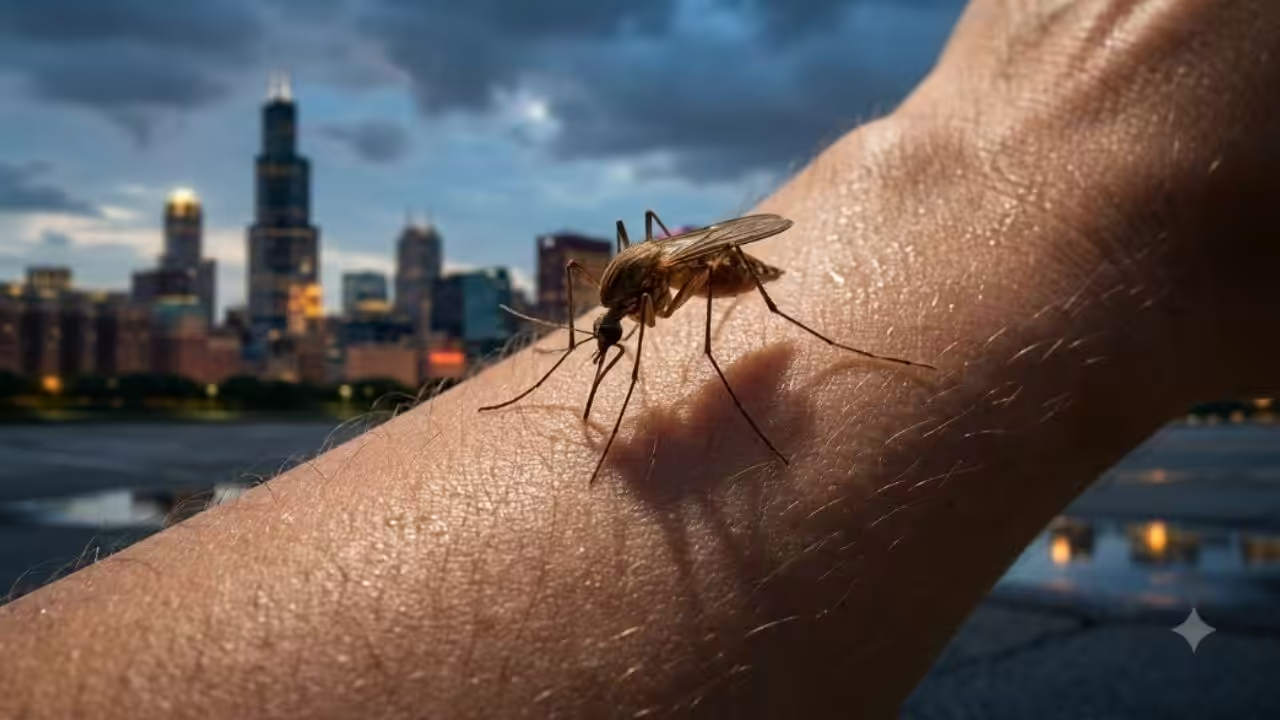
Chicago has recorded its first West Nile virus-related death of 2026 as mosquito-borne infections rise across the United States during the season’s most active period.
The death involved a Chicago woman in her 60s, according to local health authorities. Officials also confirmed the city’s first two human cases of the year, bringing renewed attention to a virus that causes no symptoms in most people but can occasionally lead to severe neurological illness.
Preliminary federal figures showed 407 reported cases and 23 deaths nationwide as of September 1. Of those infections, 285 were classified as neuroinvasive, meaning the virus affected the brain, spinal cord, or surrounding tissues.
Table of Contents
Chicago Confirms First Cases and Fatality
The Chicago Department of Public Health confirmed the two infections and one death in its official announcement on September 1. Personal details about the patients were limited to protect their privacy.
Chicago had already detected West Nile virus in local mosquito populations earlier in the summer. The city’s first West Nile-positive mosquito batch of 2026 was confirmed in June, signalling that the virus was circulating before any human cases were reported.
Local authorities have since carried out insecticide spraying in several community areas where surveillance identified increased mosquito activity. These efforts are intended to reduce adult mosquito populations and lower the likelihood of infected mosquitoes reaching residents.
Heavy Rainfall Creates Ideal Breeding Conditions
Chicago experienced one of its rainiest summers recently, leaving behind numerous pools of standing water where mosquitoes could reproduce. Even a small quantity of water collected in a bucket, flowerpot, clogged gutter, or discarded tire can support mosquito development.
CDPH Commissioner Dr. Garth Walker said the unusually wet conditions had given mosquitoes ample opportunities to breed. He emphasized that preventing bites and removing stagnant water remain the most effective steps residents can take.
Warm temperatures also accelerate the mosquito life cycle. When warmth and repeated rainfall occur together, mosquito populations can grow quickly, increasing the likelihood that the virus will spread among infected birds, mosquitoes, and humans.
How West Nile Virus Spreads
West Nile virus circulates primarily between birds and mosquitoes. A mosquito becomes infected after feeding on a bird carrying the virus. It can then transmit the pathogen to a person through a later bite.
Humans are considered incidental hosts because infected people generally do not develop enough virus in their blood to infect another mosquito. The illness does not spread through coughing, touching, or ordinary contact with an infected person.
Rare cases of transmission have occurred through blood transfusion, organ transplantation and laboratory exposure. Transmission from a mother to her baby during pregnancy, delivery, or breastfeeding has also been documented, although it remains uncommon.
The CDC’s overview of West Nile virus identifies it as the leading cause of mosquito-borne disease in the contiguous United States.
Most Infected People Never Develop Symptoms
Around 80% of people infected with West Nile virus experience no noticeable symptoms. This means official case numbers capture only a fraction of the infections occurring in a community.
Approximately one in five infected people develops a milder illness known as West Nile fever. Symptoms can include fever, headache, joint and muscle pain, vomiting, diarrhea or a skin rash. Most patients recover fully, but tiredness and weakness may continue for weeks or, in some cases, months.
Symptoms typically begin 2 to 6 days after a mosquito bite. The incubation period may be longer for people whose immune systems have been weakened by illness, medication or medical treatment.
Because the early symptoms resemble several common viral infections, doctors may need to perform laboratory testing to establish the cause.
Severe Illness Can Affect the Nervous System
A small proportion of patients develops West Nile neuroinvasive disease. This serious form can cause encephalitis, meningitis, or acute flaccid paralysis by affecting the brain, the membranes surrounding the brain and spinal cord, or the spinal cord itself.
Warning signs include high fever, severe headache, neck stiffness, confusion, tremors, seizures, muscle weakness, paralysis, and loss of consciousness. People experiencing neurological symptoms require immediate medical assessment.
Recovery can take several weeks or months, and some patients are left with long-term problems involving strength, movement, memory or concentration. Severe cases can also result in death.
The latest CDC West Nile surveillance data are preliminary and updated periodically. Mild infections are particularly likely to go undiagnosed and unreported, while serious cases are more likely to appear in official totals.
Older Adults Face the Greatest Danger
Anyone infected with West Nile virus can become seriously ill, but the probability increases with age. Adults over 60 and people with weakened immune systems are at greater risk of neurological complications.
Organ-transplant recipients and people living with cancer, diabetes, hypertension, or kidney disease may also be more vulnerable. The Chicago death involving a woman in her 60s highlights how age can influence the severity of the disease.
Families caring for older or medically vulnerable relatives should pay close attention to symptoms that go beyond an ordinary fever, particularly confusion, neck stiffness, unusual weakness or difficulty remaining alert.
No Human Vaccine or Specific Cure is Available
There is no licensed human vaccine for West Nile virus and no antiviral medicine that specifically eliminates the infection. Treatment depends on the severity of the patient’s condition.
Mild illness can often be managed with rest, fluids and appropriate medication for fever or pain. Severe cases may require hospitalization, intravenous fluids, respiratory support and close nursing supervision.
Antibiotics cannot treat West Nile virus because they work against bacterial infections rather than viruses. The absence of a specific cure makes prevention especially important during periods of intense mosquito activity.
Prevention Remains the Best Defense
The CDC’s mosquito-bite prevention guidance recommends EPA-registered repellents containing ingredients such as DEET, picaridin, IR3535, oil of lemon eucalyptus, para-menthane-diol or 2-undecanone.
People can also reduce exposure by wearing loose-fitting, long-sleeved clothing, repairing damaged window screens, and regularly emptying containers that collect water. Water-holding objects should be scrubbed, covered, turned over or discarded at least once a week.
Chicago’s first West Nile death of 2026 is a reminder that the virus can have consequences far more serious than an uncomfortable mosquito bite. As warm weather continues, consistent precautions around homes and prompt attention to neurological symptoms could help prevent further severe illness.