Nalanda Medical College and Hospital (NMCH) in Patna operates as one of Bihar’s premier medical institutions, housing a comprehensive range of departments that train MBBS students across all phases of medical education. The college divides its academic structure into pre-clinical, para-clinical, and clinical departments, each serving distinct pedagogical roles in shaping competent medical professionals for Bihar’s healthcare system.
Table of Contents
Pre-Clinical Departments at NMCH Patna
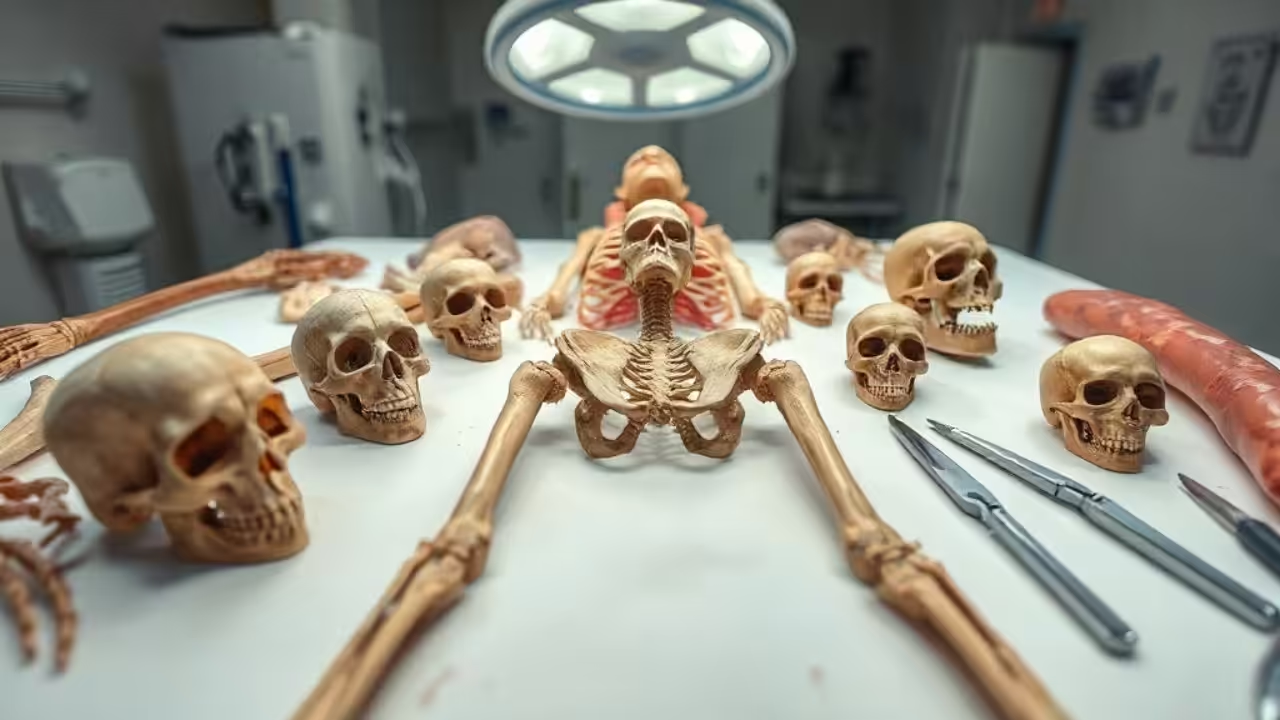
The pre-clinical phase introduces first-year MBBS students to foundational medical sciences. NMCH Patna maintains three core pre-clinical departments: Anatomy, Physiology, and Biochemistry. The Anatomy department features dedicated dissection halls and museum specimens, providing students hands-on experience with human cadavers essential for understanding body structure. Physiology laboratories equip students with experimental tools to study organ systems and physiological mechanisms, while the Biochemistry department focuses on metabolic processes and clinical chemistry through structured laboratory sessions.
Para-Clinical Departments Supporting Diagnostic Training
Para-clinical departments bridge basic sciences and clinical practice by focusing on diagnostic and laboratory medicine. NMCH houses seven key para-clinical departments: Pathology, Microbiology, Pharmacology, Forensic Medicine, Community Medicine (Preventive and Social Medicine), and Radiodiagnosis. According to National Medical Commission official website, these departments provide critical training in disease identification and treatment protocols. The Pathology department operates histopathology and cytology labs where students examine tissue samples, while Microbiology offers training in bacteriology, virology, and parasitology. Community Medicine emphasizes public health initiatives relevant to Bihar’s rural healthcare challenges, including maternal health programs and epidemic management.
Clinical Departments for Patient-Centered Learning
Clinical departments form the backbone of practical medical training at NMCH Patna, where students directly engage with patient care under faculty supervision. The college operates multiple clinical departments including General Medicine, General Surgery, Obstetrics and Gynaecology, Paediatrics, Orthopaedics, Ophthalmology, ENT (Ear, Nose, and Throat), Dermatology, Psychiatry, Anaesthesiology, and Tuberculosis and Chest Diseases. Medicine and Surgery departments maintain the largest patient volumes, offering extensive ward postings where students develop diagnostic reasoning and treatment planning skills. The Obstetrics and Gynaecology department manages a busy labor ward serving Patna’s population, providing students regular exposure to childbirth management and gynecological procedures. Paediatrics handles infant and child healthcare cases, addressing conditions prevalent in Bihar such as malnutrition and infectious diseases.
Specialty and Super-Specialty Services
Beyond core clinical departments, NMCH Patna extends training through specialty units including Cardiology, Neurology, Nephrology, and Emergency Medicine. These units expose students to advanced medical conditions requiring specialized intervention. The Emergency Medicine department operates round-the-clock trauma and critical care services, giving students firsthand experience managing acute medical emergencies common in urban Patna. Orthopaedics and Ophthalmology departments conduct regular outpatient clinics and surgical procedures, allowing students to observe and assist in operations ranging from cataract surgeries to fracture management.
Integrated Learning Across Departmental Structure

NMCH Patna designs its departmental structure to ensure progressive learning from foundational sciences through clinical application. Students rotate through departments following a structured curriculum that aligns theoretical knowledge with practical competencies. This integration prepares graduates for diverse medical careers, whether pursuing postgraduate specialization or serving in Bihar’s primary healthcare centers. The departmental framework ensures comprehensive medical education meeting national standards while addressing regional healthcare priorities specific to Patna and surrounding districts.