Nalanda Medical College and Hospital (NMCH) in Patna stands as one of Bihar’s oldest and most respected medical institutions, offering comprehensive medical education alongside extensive patient care services. Established in 1970, the college operates under Aryabhatta Knowledge University and maintains recognition from the National Medical Commission, making it a cornerstone of healthcare education in eastern India.
Table of Contents
Academic Programs and Course Structure
NMCH Patna offers undergraduate and postgraduate medical programs designed to meet national medical education standards. The flagship MBBS program admits 150 students annually through the National Eligibility cum Entrance Test (NEET-UG). The course spans five and a half years, including a one-year compulsory rotating internship across various clinical departments.
For postgraduate aspirants, the institution provides MD and MS programs across 19 clinical and non-clinical specialties. Seats are allocated through NEET-PG, with approximately 80 postgraduate positions available each academic session. Popular specializations include General Medicine, General Surgery, Obstetrics and Gynaecology, Paediatrics, and Orthopaedics. The college also runs diploma courses in several branches, providing alternative pathways for medical graduates.
Fee Structure and Financial Considerations
As a government-run medical college, NMCH maintains accessible fee structures compared to private institutions. According to Nalanda Medical College Patna site, the annual MBBS tuition fee stands at approximately ₹8,000 to ₹12,000, with additional charges for hostel accommodation, examination fees, and miscellaneous expenses. Total annual expenditure typically ranges between ₹25,000 and ₹40,000, making it financially viable for middle-class families across Bihar.
Postgraduate students face slightly higher fees, though still considerably lower than private medical colleges. Several state and central government scholarship schemes support meritorious students from economically disadvantaged backgrounds, further reducing the financial burden on families.
Admission Process and Eligibility Criteria
Admission to NMCH follows a merit-based selection process governed by state and national counseling authorities. For MBBS, candidates must qualify NEET-UG and participate in Bihar state counseling conducted by the Bihar Combined Entrance Competitive Examination Board. Students must have completed 10+2 with Physics, Chemistry, and Biology, securing at least 50% aggregate marks (40% for reserved categories).
The admission timeline typically begins in July, with document verification and seat allocation extending through August and September. Candidates should prepare original certificates, domicile proof, category certificates if applicable, and NEET scorecards. Postgraduate admissions follow NEET-PG results and participate in both state and all-India quota counseling rounds.
Hospital Facilities and Patient Care Services
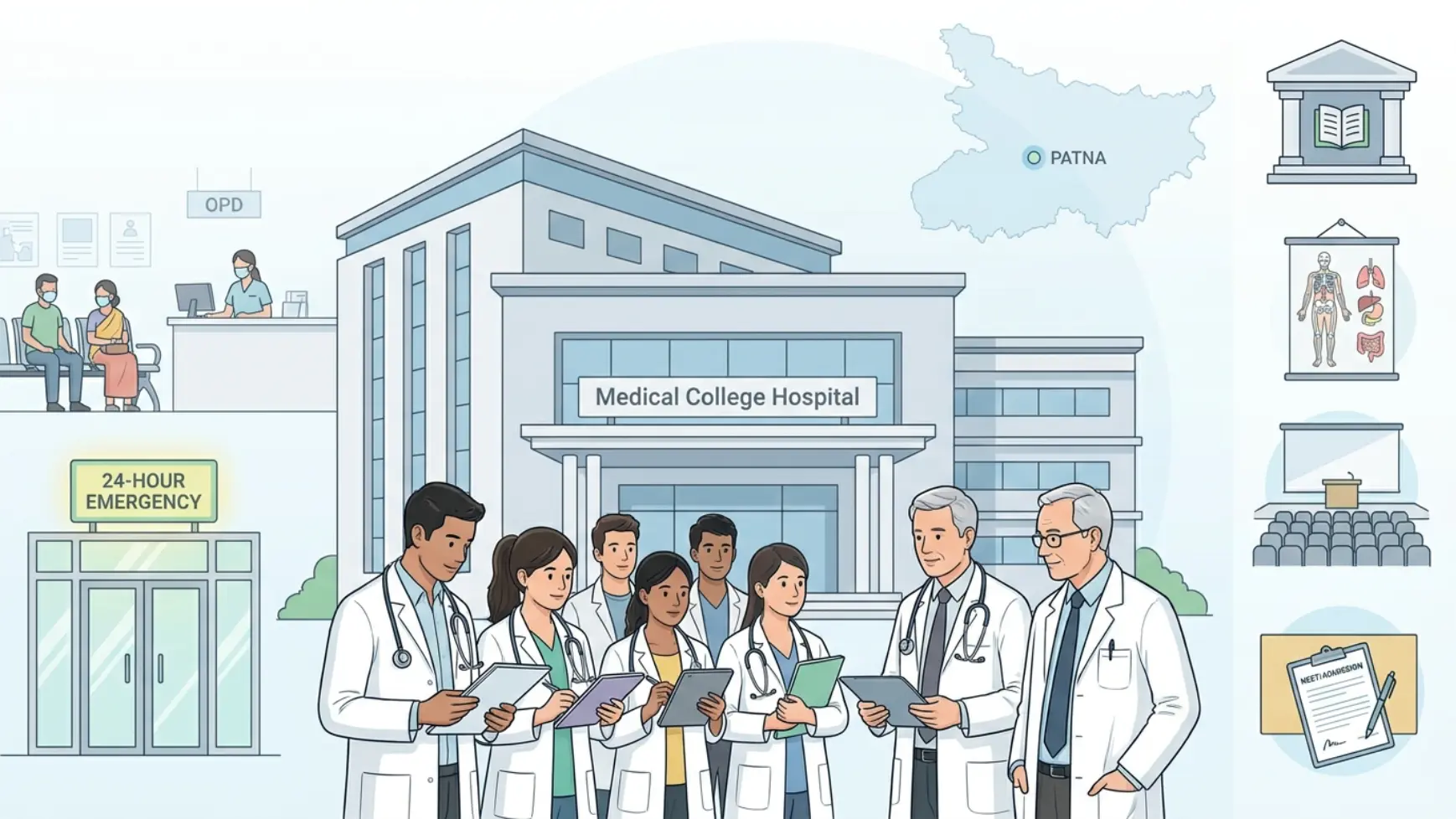
The attached Nalanda Medical College Hospital serves as both a teaching facility and a major public healthcare provider for Patna and surrounding districts. The hospital operates over 900 beds across general wards, specialty departments, and intensive care units. Daily outpatient attendance frequently exceeds 1,500 patients, offering affordable healthcare to residents who cannot access private medical facilities.
Clinical departments include comprehensive services in cardiology, neurology, nephrology, and oncology. The hospital maintains a 24-hour emergency department, blood bank, diagnostic imaging center with CT and MRI facilities, and a well-equipped pathology laboratory. Students gain hands-on clinical exposure through rotations in these departments, developing practical skills under faculty supervision.
Campus Infrastructure and Student Life
The NMCH campus spans approximately 30 acres in the Agamkuan area of Patna, providing separate hostel facilities for male and female students. The central library houses over 15,000 medical textbooks, journals, and digital resources, remaining accessible during extended hours for examination preparation. Anatomy and physiology departments feature dissection halls and museums with preserved specimens for student learning.
Beyond academics, students participate in annual cultural festivals, sports competitions, and community health initiatives organized by various student bodies. The college regularly conducts health camps in rural Bihar villages, allowing students to understand grassroots healthcare challenges while serving underserved populations. This combination of rigorous academic training and practical community engagement prepares graduates for diverse medical careers across India.