Patna has emerged as a critical hub for medical education in eastern India, where government medical colleges serve as the primary gateway for students aspiring to bridge the healthcare divide between urban centers and underserved rural communities. The significance of these institutions extends beyond affordability — they fundamentally shape how future physicians understand and address the healthcare needs of Bihar’s predominantly rural population.
Table of Contents
The Training Ground for Rural Healthcare Delivery
Government medical colleges in Bihar, including Patna Medical College and Hospital and Nalanda Medical College, operate attached to tertiary care hospitals that receive patients from remote districts with limited healthcare infrastructure. Medical students rotating through these wards encounter diseases and conditions rarely seen in private hospitals — advanced tuberculosis cases, severe malnutrition complications, and tropical infections that urban private institutions seldom manage. This exposure builds clinical acumen specifically relevant to India’s rural healthcare challenges.

The patient demographic itself becomes the curriculum. Students learn to communicate across language barriers, work with limited diagnostic resources, and make clinical decisions when advanced imaging or laboratory tests face delays. According to Bihar government health department, over 75 percent of the state’s population resides in rural areas, making this training environment a realistic preparation for where most graduates will eventually practice.
Economic Accessibility and Service Obligations
Government medical colleges charge tuition fees substantially lower than private institutions — a difference that often determines whether talented students from middle-income and economically weaker families can pursue medicine at all. The current fee structure at government colleges in Bihar ranges from ₹10,000 to ₹50,000 annually, compared to ₹8 to 25 lakh per year at private medical colleges. This 20 to 50 times cost differential makes government seats intensely competitive.
Many states, including Bihar, require government college graduates to complete rural service bonds — typically one to two years in designated rural health centers. While sometimes viewed as restrictive, these mandates ensure that trained physicians reach areas with acute doctor shortages. The bond system creates a structured pipeline that private medical education rarely replicates, directly addressing the maldistribution of healthcare professionals.
Infrastructure Challenges and Learning Resilience

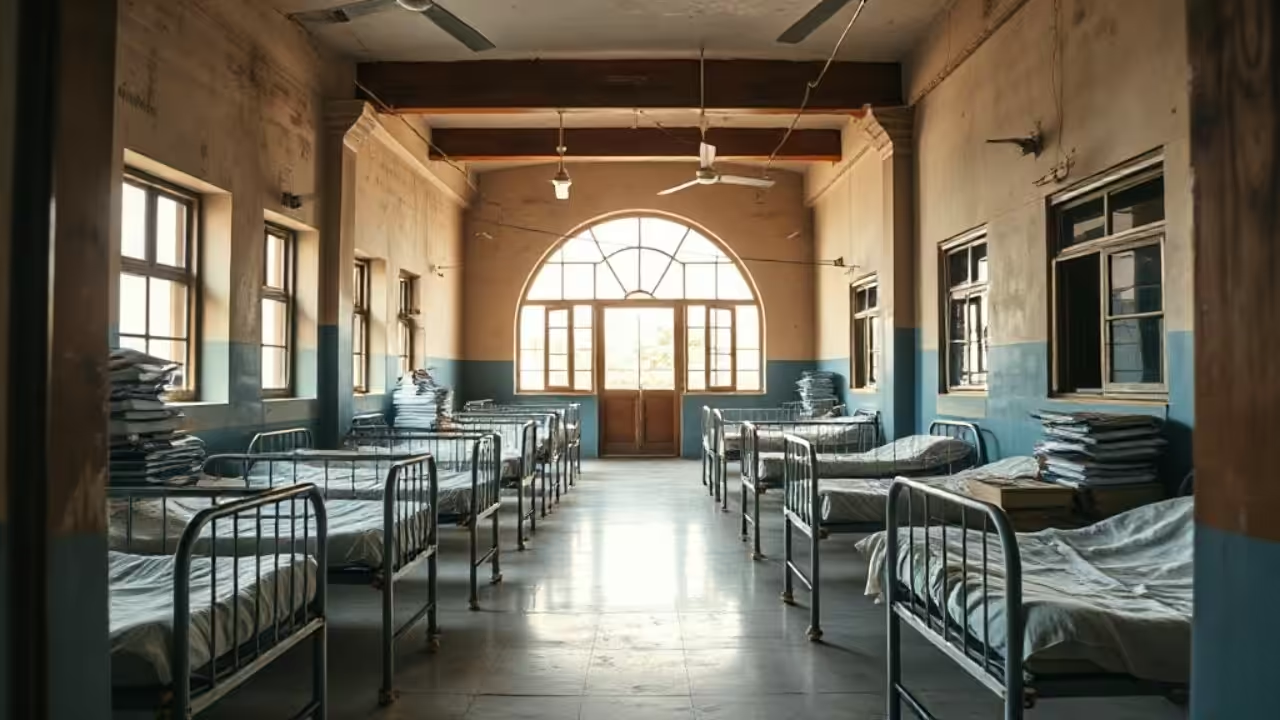
Government medical colleges face persistent infrastructure constraints — overcrowded wards, aging equipment, and faculty shortages remain ongoing concerns. However, these limitations inadvertently teach resourcefulness. Students learn to prioritize clinical examination skills when diagnostic tools are unavailable, develop efficient patient management protocols under high caseloads, and collaborate across departments to solve complex cases.
| Training Aspect | Government Colleges | Private Colleges |
|---|---|---|
| Patient Volume | High diversity, rural cases | Urban, insured patients |
| Cost to Students | ₹10,000–50,000/year | ₹8–25 lakh/year |
| Service Bond | Mandatory rural posting | Typically none |
| Disease Exposure | Infectious, tropical diseases | Lifestyle, chronic diseases |
The resilience developed in resource-limited settings prepares graduates for the realities of district hospitals and primary health centers where most will build their careers.
Long-Term Impact on Healthcare Equity
Research consistently shows that physicians trained in government institutions demonstrate higher retention rates in rural and semi-urban areas compared to private college graduates. The familiarity with resource constraints, combined with exposure to underserved populations during training, reduces the culture shock that drives urban migration among doctors.

For parents evaluating medical education pathways in Patna and across Bihar, government colleges represent not just financial pragmatism but a training philosophy aligned with public health priorities. The institutions produce physicians equipped to function effectively in India’s actual healthcare landscape rather than an idealized version of it. As Bihar continues expanding its medical education capacity, strengthening these government institutions remains essential to building a healthcare workforce capable of serving all communities equitably.