Bihar faces one of the most severe doctor shortages in India, with just 3.2 government doctors available per 100,000 population—far below the WHO-recommended ratio of 1:1,000. For medical students and aspiring physicians in Patna, this gap represents both a sobering challenge and an extraordinary opportunity to shape healthcare delivery across the state’s 38 districts.
Table of Contents
The Numbers Behind Bihar’s Healthcare Crisis
The shortage extends beyond headcount. Bihar operates with approximately 4,200 doctors serving a population exceeding 128 million people. Rural districts bear the brunt of this deficit, where primary health centers often function without a single MBBS doctor for months. Patna Medical College Hospital and Indira Gandhi Institute of Medical Sciences, despite producing hundreds of graduates annually, cannot keep pace with demand as many newly qualified doctors migrate to urban centers in other states.
| Healthcare Metric | Bihar | National Average | WHO Standard |
|---|---|---|---|
| Doctors per 100,000 | 3.2 | 8.6 | 100 |
| Hospital beds per 1,000 | 0.3 | 0.5 | 3.0 |
| Medical colleges (2024) | 16 | — | — |
| Rural health centers understaffed | 68% | 42% | — |
Why Doctors Leave Bihar After Graduation
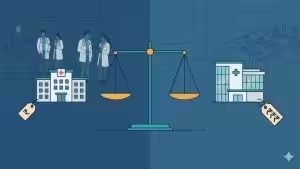
Compensation disparities drive much of the exodus. A medical officer in rural Bihar earns significantly less than counterparts in Maharashtra or Karnataka, while working conditions remain challenging. Infrastructure gaps, limited diagnostic facilities, and delayed salary disbursements make retention difficult. Many MBBS graduates from Patna seek postgraduate seats in other states, with fewer than 40 percent returning after specialization. Parents investing in their children’s medical education naturally want assurance that career prospects justify the commitment.
Innovative Solutions Gaining Momentum
The Bihar government has introduced bond-based service requirements for MBBS graduates from state-funded institutions, mandating two years of rural posting. [CITE: Bihar medical education bond policy DMCH] This contractual obligation aims to stabilize staffing at community health centers, though enforcement remains inconsistent. Telemedicine initiatives connecting district hospitals with specialists in Patna show promise, reducing the need for patient referrals while allowing doctors to consult remotely. Private medical colleges opening in Gaya, Darbhanga, and Muzaffarpur add 1,200 seats annually, gradually expanding the physician pipeline.
What Medical Students Can Expect
For current MBBS students in Patna, rural postings now form a likely part of early career trajectories. These assignments offer intensive clinical exposure across diverse pathologies—cases of malaria, kala-azar, and maternal complications remain common in underserved blocks. Students prepared for this reality often develop stronger diagnostic skills than peers who begin in well-equipped urban hospitals. The state has also begun offering incentive allowances and accelerated promotion tracks for doctors serving five continuous years in rural areas, making such postings more financially viable.
Building Sustainable Healthcare Infrastructure

Long-term solutions require more than filling vacancies. Bihar needs functional supply chains for essential medicines, reliable electricity for operation theaters, and continuous professional development programs that keep rural doctors updated on protocols. Medical colleges must integrate rural health modules into curricula, preparing graduates psychologically and clinically for service outside major cities. When infrastructure improves and compensation aligns with workload, retention rates will naturally rise.
Bihar’s doctor shortage will not resolve overnight, but systemic interventions are underway. For medical students graduating from Patna’s institutions, the path ahead demands both resilience and a commitment to public health. Those who stay and serve will find themselves at the forefront of transforming healthcare access for millions who currently lack even basic medical attention.