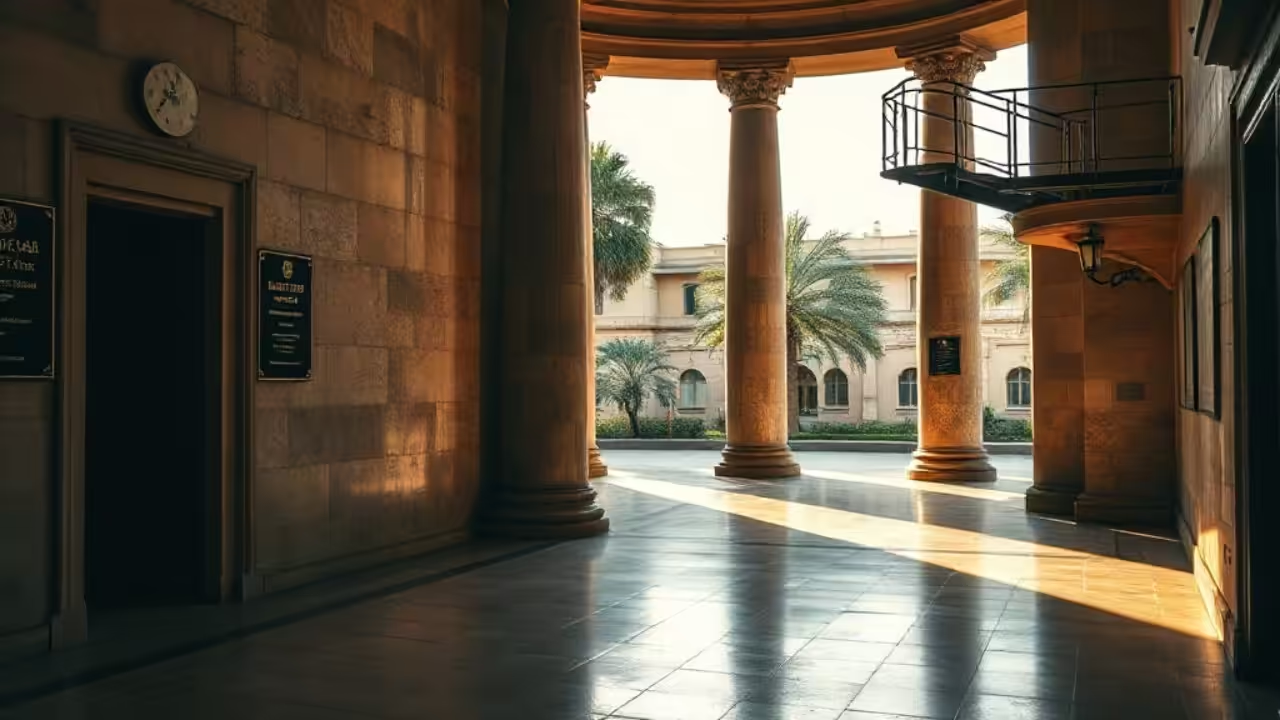
Patna stands as the administrative center for medical education in Bihar, where aspiring doctors navigate a competitive yet structured admission system across government medical colleges. The state operates 11 government medical colleges offering MBBS programs, with seat allocation managed through NEET-UG scores and state quota counseling. Understanding the institutional landscape, fee structures, and admission protocols proves essential for students targeting affordable medical education in 2026.
Table of Contents
Government Medical Colleges in Bihar: Complete Institutional Overview
Bihar’s government medical college network spans urban centers and district headquarters, each institution approved by the National Medical Commission (NMC). Patna Medical College and Hospital (PMCH) remains the oldest and largest, established in 1925 with 250 MBBS seats annually. Nalanda Medical College in Patna follows with 150 seats, while Darbhanga Medical College and Indira Gandhi Institute of Medical Sciences (IGIMS) in Patna each admit 100 students per batch.
The remaining seven colleges—located in Gaya, Bhagalpur, Muzaffarpur, Saharsa, Bettiah, Madhubani, and Purnea—typically offer between 100 and 150 seats. Recent capacity expansions under central government initiatives have increased total state seats beyond 1,600 annually. Each institution maintains attached teaching hospitals providing clinical training environments essential for undergraduate medical curricula.
| Medical College | Location | MBBS Seats (2026) | Annual Fees |
|---|---|---|---|
| Patna Medical College and Hospital | Patna | 250 | ₹62,280 |
| Nalanda Medical College | Patna | 150 | ₹62,280 |
| IGIMS Patna | Patna | 100 | ₹62,280 |
| Darbhanga Medical College | Darbhanga | 150 | ₹62,280 |
| Anugrah Narayan Magadh Medical College | Gaya | 100 | ₹62,280 |
| Jawaharlal Nehru Medical College | Bhagalpur | 100 | ₹62,280 |
| Sri Krishna Medical College | Muzaffarpur | 100 | ₹62,280 |
Fee Structure and Financial Considerations for 2026 Admissions
Government medical colleges in Bihar maintain uniform fee structures under state government regulations. The annual tuition fee stands at ₹62,280 for MBBS programs, totaling approximately ₹3.11 lakh across the standard 4.5-year academic period before the mandatory internship year. This figure excludes hostel accommodation (₹8,000 to ₹12,000 annually), examination fees, and personal expenses.
Compared to private medical colleges where annual fees range between ₹8 lakh and ₹25 lakh, government institutions offer substantial cost advantages. Students from economically weaker sections qualify for fee waivers and scholarships through state welfare schemes. According to [CITE: Bihar government medical education fee structure 2025], the fee policy remains unchanged for the 2026 admission cycle, providing financial predictability for planning families.
NEET-Based Admission Process and Counseling Timeline

Admission to Bihar government medical colleges operates exclusively through NEET-UG scores, with the Bihar Combined Entrance Competitive Examination Board (BCECEB) conducting state quota counseling. The state quota comprises 85 percent of total seats, while 15 percent falls under the All India Quota managed by the Medical Counselling Committee.
The counseling process typically begins in August following NEET results, spanning three rounds plus a mop-up round. Students register on the BCECEB portal, lock their college preferences, and attend document verification at designated centers in Patna. Cutoff ranks vary by category—general category students typically require NEET scores above 580 for admission to premier colleges like PMCH, while reserved categories see lower thresholds.
Domicile requirements mandate Bihar residency for state quota seats. Students must submit residence certificates, category certificates, and original academic documents during physical reporting. The final seat allotment depends on NEET rank, reservation category, choice filling strategy, and seat availability after each counseling round.
Preparing for Medical Education in Bihar: Practical Guidance
Prospective students should target NEET scores 20 to 30 marks above previous year cutoffs to secure preferred college placements. Visiting campuses during admission seasons provides insights into infrastructure, faculty strength, and patient load in teaching hospitals. Patna-based colleges offer metropolitan advantages including coaching centers and academic resources, while district colleges provide smaller batch sizes and closer faculty interaction.
Parents should budget beyond tuition fees—hostel deposits, medical equipment purchases, and textbook costs add ₹40,000 to ₹60,000 in the first year. Understanding the five-and-a-half-year commitment, including the compulsory rotating internship, helps families plan financially and logistically. Early preparation for state counseling—gathering documents, understanding reservation policies, and researching institutional reputations—significantly improves admission outcomes in Bihar’s competitive medical education landscape.