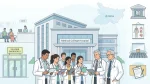
Bihar faces a persistent public health challenge with tuberculosis, malaria, and vector-borne diseases affecting millions across its 38 districts. Patna, the state capital, serves as both the administrative center for disease surveillance and a critical hub for treatment facilities, yet the burden extends far beyond urban boundaries into rural communities where healthcare access remains limited.
Table of Contents
Tuberculosis Burden and Case Detection in Bihar
The state reports approximately 150,000 new tuberculosis cases annually, placing it among India’s highest TB burden states. According to NIKSHAY tuberculosis database portal, case detection has improved through the Revised National Tuberculosis Control Programme, with Patna Medical College Hospital and Indira Gandhi Institute of Medical Sciences serving as nodal centers for drug-resistant TB management. Medical students rotating through these facilities observe the clinical spectrum from pulmonary manifestations to extrapulmonary presentations common in immunocompromised populations.

Bihar’s TB control strategy emphasizes DOTS therapy implementation across primary health centers. However, treatment completion rates hover around 75 percent, with patient migration and socioeconomic barriers contributing to gaps. The prevalence of multidrug-resistant tuberculosis poses particular concern, requiring specialized diagnostic facilities available primarily in Patna and Gaya.
Malaria Transmission Patterns Across Bihar
Malaria transmission in Bihar shows distinct seasonal variation, with cases peaking during and immediately following monsoon months from July through October. The state records 30,000 to 50,000 confirmed malaria cases yearly, though actual incidence likely exceeds reported figures due to underdiagnosis in peripheral areas. Plasmodium vivax accounts for approximately 65 percent of infections, while Plasmodium falciparum causes the remaining cases with higher severity.
Districts bordering Jharkhand and Uttar Pradesh demonstrate higher endemicity. Vector control programs face challenges from Anopheles mosquito breeding in rice paddies and stagnant water bodies that characterize much of Bihar’s agricultural landscape. Urban areas including Patna experience sporadic outbreaks, particularly in densely populated neighborhoods with inadequate drainage systems.
Vector-borne Disease Spectrum Beyond Malaria

Dengue has emerged as an increasing public health concern in Bihar over the past decade. Patna experiences annual dengue outbreaks during post-monsoon months, with several hundred confirmed cases each year. The Aedes aegypti mosquito thrives in urban water storage containers, making middle-class neighborhoods as vulnerable as informal settlements.
Japanese encephalitis represents another significant vector-borne threat, particularly affecting children in rural districts. The state conducts annual JE vaccination campaigns, yet gaps in coverage persist. Chikungunya cases appear sporadically, though surveillance systems may underreport actual incidence. Lymphatic filariasis, while declining, still affects pockets of population in eight districts where Culex mosquitoes maintain transmission cycles.
Implications for Medical Education and Practice
Medical students pursuing MBBS in Bihar gain direct exposure to diseases that remain theoretical concepts in many other regions. Clinical rotations in medicine and pediatrics departments provide opportunities to diagnose these conditions, interpret diagnostic tests including peripheral smear microscopy and rapid diagnostic kits, and manage complications. Understanding epidemiological patterns becomes essential for future practice, whether students remain in Bihar or relocate elsewhere.

Parents of medical students should recognize that this clinical exposure builds diagnostic acumen unavailable in lower-burden regions. Graduates from Bihar medical colleges often demonstrate stronger competency in tropical medicine, infectious disease management, and public health approaches to disease control. This hands-on experience with tuberculosis, malaria, and vector-borne diseases strengthens both clinical skills and public health perspective, preparing physicians for diverse practice settings across India and beyond.