The transition into MBBS first year in Patna marks a foundational phase where students encounter three core subjects that form the bedrock of medical education: Anatomy, Physiology, and Biochemistry. These disciplines establish the scientific framework necessary for clinical practice, demanding both conceptual clarity and sustained dedication from the outset.
Table of Contents
Anatomy: Mapping the Human Architecture
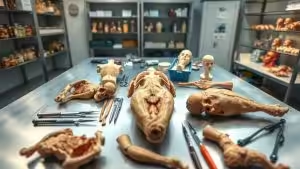
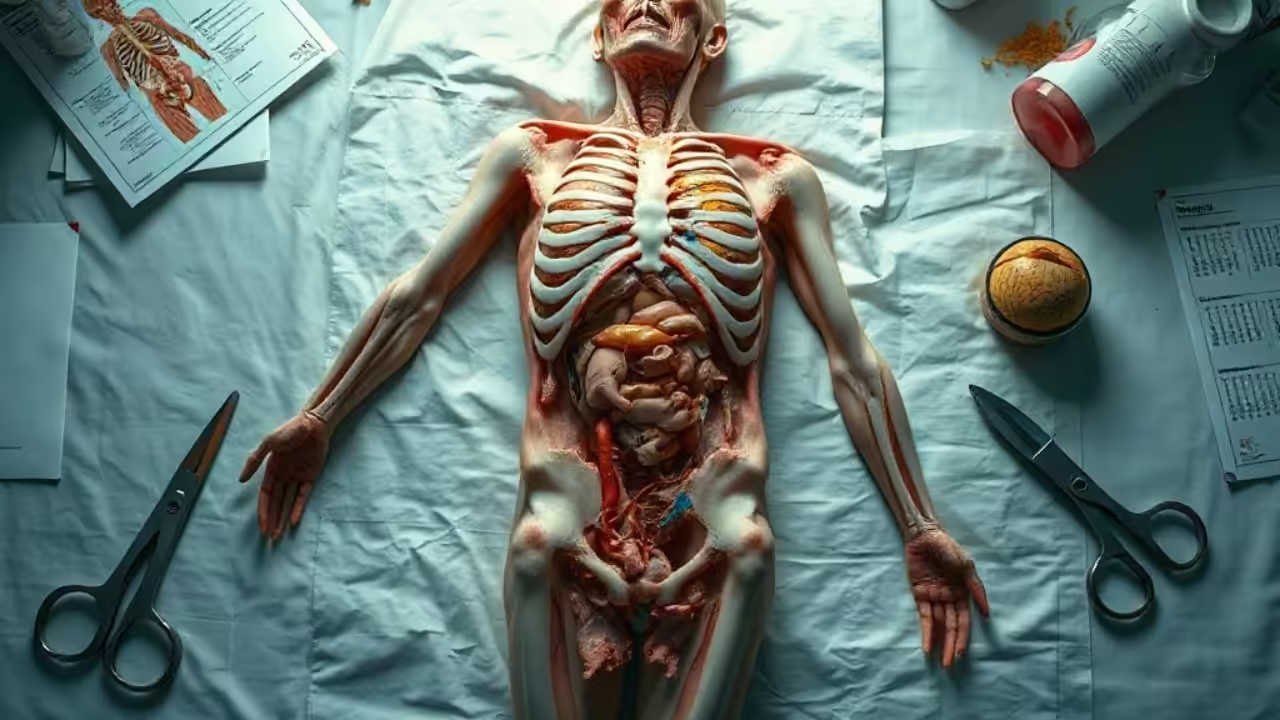
Anatomy in first year focuses on understanding the structural organization of the human body through systematic dissection and examination. Students at medical colleges across Patna typically spend significant hours in dissection halls, working with cadavers to comprehend the spatial relationships between organs, blood vessels, nerves, and musculoskeletal structures. The curriculum divides into gross anatomy, which examines structures visible to the naked eye, and microscopic anatomy or histology, which explores tissues at the cellular level.

Practical sessions constitute roughly 60 percent of anatomy instruction, with theoretical lectures covering embryological development and radiological correlations. NMC undergraduate curriculum guidelines Students must master anatomical terminology in Latin, develop three-dimensional spatial reasoning, and connect structural knowledge to future surgical applications. Regular spot tests and terminal examinations assess retention of thousands of anatomical landmarks, making consistent revision essential rather than optional.
Physiology: Understanding Functional Mechanisms
While anatomy answers what and where, physiology addresses how and why the body functions. This subject examines cardiovascular dynamics, respiratory mechanics, renal filtration, neurological signaling, and endocrine regulation among other systems. Medical students in Bihar find physiology particularly challenging due to its integration of physics, chemistry, and mathematics in explaining biological phenomena.
Laboratory work involves experiments demonstrating principles such as nerve conduction velocity, blood pressure regulation, and pulmonary function testing. Students learn to operate instruments like spirometers, electrocardiographs, and haemocytometers while interpreting experimental data. Theoretical components require understanding feedback mechanisms, homeostatic control, and pathophysiological disruptions that lead to disease states. [CITE: first year MBBS physiology practical manual] Mastery of normal physiology proves indispensable when studying pathology and pharmacology in subsequent years.
Biochemistry: Molecular Foundations of Medicine
Biochemistry bridges basic sciences with clinical medicine by examining chemical processes within living organisms. The first year curriculum covers protein structure and enzyme kinetics, carbohydrate and lipid metabolism, molecular genetics, and clinical biochemistry including diagnostic markers for diseases. Students often struggle initially with the abstract nature of metabolic pathways and their numerous intermediates.
Practical sessions teach laboratory techniques such as colorimetry, chromatography, and electrophoresis alongside interpretation of biochemical test results. Understanding conditions like diabetes mellitus, jaundice, and metabolic disorders requires firm biochemical knowledge. The subject demands memorization of chemical structures and reaction sequences while simultaneously grasping their clinical significance in diagnosis and treatment.
| Subject | Theory Hours per Week | Practical Hours per Week | Primary Assessment Focus |
|---|---|---|---|
| Anatomy | 4 to 5 | 12 to 15 | Dissection, spotters, viva voce |
| Physiology | 5 to 6 | 8 to 10 | Experiments, case scenarios, MCQs |
| Biochemistry | 4 to 5 | 6 to 8 | Lab techniques, metabolic pathways |
Strategic Approach for Success in Patna Medical Colleges
Students pursuing MBBS at institutions like Patna Medical College and Hospital, Indira Gandhi Institute of Medical Sciences, or private medical colleges in the region benefit from structured study schedules that allocate daily time to each subject. Integration across the three disciplines strengthens retention: connecting biochemical pathways to physiological functions and both to anatomical structures creates cohesive understanding rather than isolated memorization.
Forming study groups, attending all practical sessions, utilizing anatomical models and charts, and solving previous years’ university question papers constitute proven strategies. Parents should understand that first year establishes patterns of discipline and time management that determine success throughout the five-and-a-half-year programme. Regular communication with faculty during doubt-clearing sessions prevents conceptual gaps from widening into examination obstacles.